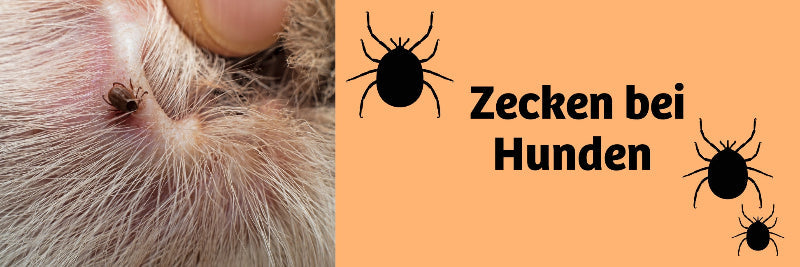

Fleas on dogs are more than just an annoying itch. A flea infestation can cause severe itching, skin irritation, restlessness, and even allergic reactions in sensitive dogs. Especially tricky: often you don't see any fleas, but only the consequences – scratching, gnawing, reddened skin, or small black crumbs in the coat.
Many dog owners don't want to immediately resort to "chemical warfare" when dealing with fleas. This is understandable – especially for sensitive dogs, allergy sufferers, or dogs with delicate skin. Nevertheless, it's important: if there's a real flea infestation, simply combing a bit or applying a natural oil is usually not enough. Fleas don't just live on the dog. A large part of the problem is in the environment: dog beds, sofas, carpets, blankets, baskets, and cracks.
That's why you need a clear strategy. Our approach: a 3-phase concept against fleas in dogs – first identify and act acutely, then interrupt the environment, and finally stabilize the skin and coat long-term.
When it comes to fleas, it's never just about the dog alone. You always need to consider three areas: the dog, the environment, and the skin barrier. That's why a combination of a flea comb, cleaning, observation, veterinary treatment if necessary, and a supportive skin and coat routine is most effective.
Table of Contents
- What are fleas on dogs?
- Recognizing fleas on dogs: typical symptoms
- Flea dirt test: How to find out if your dog has fleas
- Why do fleas cause such severe itching?
- The flea cycle: Why fleas are so persistent
- The BugBell 3-phase concept against flea-related itching
- Phase 1: Check the dog, calm it down, and act acutely
- Phase 2: Clean the environment and break the flea cycle
- Phase 3: Strengthen skin, coat, and natural routine
- Home remedies for fleas on dogs: What's useful?
- Chemicals or natural: What's right for a flea infestation?
- When should you see a vet?
- Our BugBell experience with sensitive dogs
- SkinHero as part of the skin and coat routine
- FAQ: Frequently Asked Questions about fleas on dogs
- Sources and coatther information
- Conclusion

What are fleas on dogs?
Fleas are small, laterally flattened, wingless parasites that feed on the blood of their host. On dogs, they usually live in the coat and move very quickly. They can jump, hide, and are often difficult to spot – especially with thick or dark coat.
The most common flea on dogs is not necessarily the classic dog flea, but often the cat flea. It can infest both dogs and cats and multiply very well in households. Therefore, a flea infestation is not just a coat problem, but a problem of the entire living environment.
If several animals live in the household, all animals should be checked for fleas if an infestation is suspected. Otherwise, one animal can repeatedly become the starting point for a new infestation.
Recognizing fleas on dogs: typical symptoms
Not every dog shows clear signs of flea infestation. Some dogs scratch intensely, others initially only show restlessness or lick certain body parts more frequently. Particularly sensitive dogs can react severely to even a few flea bites.
Typical signs of fleas on dogs include:
- intense scratching
- gnawing or biting at the coat
- frequent licking of certain areas
- restlessness or sudden jumping up
- small black crumbs in the coat, so-called flea dirt
- reddened skin
- small pustules or scabs
- hair loss, especially on the back or at the base of the tail
- sore spots from constant scratching
Irritations are particularly common on the back, at the base of the tail, on the hind legs, on the belly, or in the groin area. In the case of a flea allergy, the itching can be significantly more severe than the actual infestation suggests.
Flea dirt test: How to find out if your dog has fleas
Fleas themselves are often difficult to see. Much more often, you'll first find flea dirt. These are small black or dark brown crumbs in the coat. With a simple test, you can check if it's really flea dirt.
The simple flea dirt test
- Place your dog on a light-colored towel or paper towel.
- Comb through the coat thoroughly with a flea comb.
- Collect black crumbs on a damp white cloth.
- If the crumbs turn reddish-brown, this may indicate digested blood and thus flea dirt.
If the test is positive or your dog shows severe symptoms, you should take the flea infestation seriously. Then it's not just about removing individual fleas, but about interrupting the entire flea cycle.
Why do fleas cause such severe itching?
The itching is not only caused by the flea crawling. When feeding, the flea releases saliva into the skin. Dogs can react sensitively or allergically to this saliva. Even a small number of flea bites can then trigger severe itching and skin inflammation.
In the case of a flea allergy in dogs, the immune system reacts particularly strongly to components of the flea saliva. This can result in intense skin reactions, scabs, open sores, hair loss, and recurring inflammations.
If your dog scratches until it bleeds, develops bald spots, or continues to show severe itching despite cleaning, the skin should be examined by a vet. Other causes can also be behind itching, such as mites, allergies, skin infections, or food intolerances.
The flea cycle: Why fleas are so persistent
A common mistake with flea infestations: only the dog is treated. However, a large part of the flea population is not on the animal at all. Eggs, larvae, and pupae are in the environment – where your dog lies, sleeps, or spends a lot of time.
The flea cycle consists of several stages:
- Egg: Flea eggs fall from the dog into the environment.
- Larva: Larvae develop in carpets, blankets, cracks, or dog beds.
- Pupa: Pupae can survive protected in the environment.
- Adult flea: The flea seeks a host again and begins to feed on blood again.
This is precisely why a flea infestation can seemingly disappear after a few days and then suddenly reappear. New fleas hatch from the environment. Those who do not interrupt the flea cycle only ever fight the visible tip of the problem.
The BugBell 3-phase concept against flea-related itching
Our 3-phase concept helps you tackle flea infestations in a structured way – without reacting frantically and without immediately combining several remedies indiscriminately.
| Phase | Goal | What you do |
|---|---|---|
| Phase 1 | Check the dog and assess acute itching | Flea comb, flea dirt test, coat check, skin check, veterinary action in case of severe infestation |
| Phase 2 | Clean the environment and break the flea cycle | Washing, vacuuming, cleaning resting places, changing blankets, checking all animals |
| Phase 3 | Stabilize skin and coat long-term | Support skin barrier, build a coat routine, check feeding, prevent recurrence |
Phase 1: Check the dog, calm it down, and act acutely
The first phase involves reliably determining if your dog has fleas and how severe the infestation is. The more thoroughly you check, the better you can decide whether a natural grooming routine is sufficient or if veterinarian-approved measures are necessary.
1. Thoroughly check the coat
Pay particular attention to warm, protected areas:
- base of the tail
- back
- belly
- groin area
- hind legs
- neck and chest
2. Use a flea comb
A flea comb is one of the simplest aids. Comb slowly and systematically through the coat. Look for black crumbs, small fast insects, or reddened skin areas.
3. Soothe the skin, but don't over-groom
If the skin is irritated, you should not indiscriminately combine shampoos, oils, or sprays. Too many products can coatther stress sensitive skin. For severe itching, open sores, or inflammation, veterinary advice is advisable.
4. Check all animals in the household
If several dogs or cats live in the household, you should check all animals. Otherwise, the infestation can restart repeatedly.
Never simply use a dog product on cats. Certain active ingredients intended for dogs can be dangerous for cats. If dogs and cats live together, flea treatments should always be chosen to suit the respective animal.
Phase 2: Clean the environment and break the flea cycle
The second phase is crucial. Even if you hardly see any fleas on the dog, eggs, larvae, and pupae can be present in the environment. Therefore, you must consistently include the living area.
Washing
- Wash dog blankets
- Clean cushion covers
- Regularly clean dog beds, blankets, and washable underlays
- Wash textiles as hot as possible, as long as the material allows
Vacuuming
- Thoroughly vacuum carpets
- Vacuum sofas and upholstery
- Don't forget cracks, corners, and baseboards
- Safely empty vacuum cleaner bags or containers afterwards
Reduce resting places
During an acute infestation, it can help to temporarily reduce the number of blankets, cushions, and resting places. The fewer textile retreats there are, the easier it is to control the environment.
Remain consistent for several weeks
A common mistake is to stop after two days. Because new fleas can hatch from the environment, you should consistently continue cleaning and checking for several weeks.
Set a fixed flea rhythm for the first two weeks: comb briefly daily, vacuum frequently, keep resting places clean, and check the skin. This way, you'll recognize faster whether the infestation is receding or if coatther help is needed.
Phase 3: Strengthen skin, coat, and natural routine
Once the acute infestation is controlled, the third phase begins: stabilizing the skin and coat again. Flea bites, scratching, and stress can burden the skin barrier. Especially sensitive dogs often need some time afterwards for their skin and coat to calm down again.
This phase is not about "feeding away" fleas. That would not be a serious promise. It is about nutritionally supporting normal skin and coat function and building a good grooming routine.
Important building blocks for the skin and coat routine
- high-quality, well-tolerated feeding
- sufficient essential fatty acids
- B vitamins and nutrients for skin and coat
- regular coat checks
- mild care instead of aggressive over-grooming
- observation of itching, redness, and coat changes
Home remedies for fleas on dogs: What's useful?
Many dog owners look for home remedies for fleas in dogs. Some measures can be useful as support – others are rather problematic or not sufficiently effective.
| Measure | Classification |
|---|---|
| Flea comb | Very useful for controlling and removing individual fleas or flea dirt. |
| Washing blankets | Important because flea eggs and larvae can be in the environment. |
| Vacuuming | Very important, especially for carpets, upholstery, and resting places. |
| Coconut oil | Can be part of a natural care routine, but does not replace targeted flea control in case of severe infestation. |
| Essential oils | With caution. Not every oil is suitable for dogs; many essential oils can be problematic for cats. |
| Garlic | Not recommended as an uncontrolled home home-care approach. For dogs, garlic can be problematic depending on the amount. |
Please do not use aggressive home remedies, unsuitable essential oils, or remedies intended for other animal species. You should be especially careful with puppies, old dogs, sick dogs, pregnant dogs, or cats in the household.
Chemicals or natural: What's right for a flea infestation?
The desire for a solution without unnecessary chemicals is understandable. Nevertheless, a flea infestation should not be trivialized. Fleas can cause severe itching, skin inflammation, allergic reactions, and in severe cases, additional burdens.
A natural routine is particularly useful for support, control, and care. However, in cases of severe infestation, flea allergy dermatitis, open skin lesions, or recurrent infestations, a veterinarian-approved home-care approach may be necessary. The decisive factor is not "chemicals or nature" as a matter of belief, but: What does your dog need in this specific situation?
We advocate for as little burden as possible – but also as much protection as necessary. In cases of mild suspicion, inspection, a flea comb, and environmental care help. In cases of actual infestation, severe itching, or inflamed skin, you should not experiment for too long.
When should you see a vet?
Not every suspected flea infestation is an emergency. But there are situations in which you should have your dog examined by a veterinarian.
You should see a vet if:
- your dog scratches until it bleeds
- open or inflamed skin lesions develop
- the itching is very severe
- your dog develops bald spots
- puppies are affected
- your dog appears lethargic or has pale mucous membranes
- the infestation repeatedly returns despite cleaning
- several animals in the household are affected
- you suspect a flea allergy
Even if you find small rice-like structures around the anus or in the dog bed, clarification may be useful. Fleas can be associated with tapeworms in dogs, as dogs can ingest infected fleas while grooming.
Our BugBell experience with sensitive dogs
From our daily work with sensitive dogs, we know that many owners are not looking for a harsh all-in-one solution, but rather a long-term compatible routine. We particularly often hear from owners of dogs with sensitive skin, a tendency to itch, dull coats, or those who do not want to use chemical preparations permanently.
At the same time, transparency is important to us: food cannot reliably keep fleas away and cannot treat an acute flea infestation. That would not be a serious promise. What feeding can achieve, however, is to nutritionally support normal skin and coat function – and that is exactly where our SkinHero concept comes in.
For us, a good parasite routine does not begin with a flea or tick treatment, but with daily observation: How does the skin look? How shiny is the coat? Does the dog scratch more than usual? Are there changes after walks or contact with other animals?
SkinHero as part of the skin and coat routine
SkinHero from BugBell is not a flea treatment and not a veterinary medicine. It does not replace veterinary treatment or an approved flea preparation for acute infestation. However, SkinHero can be a useful component if you want to nutritionally support skin, coat, and normal metabolic processes.
Especially after intense scratching, coat stress, or recurring skin issues, it can be beneficial to take a closer look at the skin and coat routine.

Selected Ingredients in SkinHero
- Brewer's Yeast: provides B vitamins and is a good fit for a skin and coat routine.
- Coconut Oil: contains lauric acid and is often used in natural coat care.
- Black Cumin Oil: provides valuable fatty acids and plant compounds.
- Rosemary: is traditionally valued for its aromatic and antioxidant properties.
- Cistus Herb: contains plant polyphenols.
- Carrot: provides natural plant compounds.
- Insect Protein: is a well-tolerated protein source for many sensitive dogs.
SkinHero is part of a feeding and grooming routine. In case of acute flea infestation, you additionally need consistent control, environmental care, and for severe infestations, veterinarian-approved measures.
Also read our article on tick protection for dogs or discover our other articles about dog skin and coat.
FAQ: Frequently Asked Questions about Fleas in Dogs
How do I identify fleas in my dog?
Typical signs include intense scratching, nibbling at the coat, restlessness, reddened skin, and small black specks in the coat. You can check for flea dirt with a flea comb and a damp white cloth.
What is flea dirt?
Flea dirt consists of digested blood. It looks like small black specks. On a damp white cloth, it may turn reddish-brown.
Can fleas on dogs disappear on their own?
Usually not reliably. Since flea eggs, larvae, and pupae can reside in the environment, infestation often recurs if the dog and surroundings are not consistently managed.
Do I need to clean my home if my dog has fleas?
Yes. The environment is crucial. Dog beds, blankets, carpets, sofas, cracks, and resting places should be thoroughly cleaned to break the flea cycle.
Does coconut oil help against fleas in dogs?
Coconut oil can be part of a natural coat care routine, but it does not replace targeted flea control for acute or severe infestations.
Can food help against fleas?
Food cannot reliably keep fleas away or treat a flea infestation. However, good nutrition can nutritionally support normal skin and coat function.
When should I consult a vet for fleas?
For severe itching, open skin lesions, suspected flea allergy dermatitis, puppies, old or sick dogs, and recurrent infestations, you should seek veterinary advice.
Sources and coatther Information
- ESCCAP Germany: Recommendations for the Control of Ectoparasites in Dogs and Cats
- MSD Veterinary Manual: Fleas of Dogs
- MSD Veterinary Manual: Flea Allergy Dermatitis in Dogs and Cats
- Cornell Riney Canine Health Center: Fleas
- CDC: About Fleas
Conclusion: Fleas in Dogs Require More Than a Quick Single Measure
Fleas in dogs are unpleasant, persistent, and often not immediately visible. It's crucial to not only consider the dog but also its environment. That's why a structured 3-phase concept makes sense: inspect the dog and take acute action, clean the environment and break the flea cycle, and provide long-term support for skin and coat.
A natural routine can be a valuable component – especially for sensitive dogs. However, for severe infestations, flea allergy dermatitis, or inflamed skin, you should not experiment for too long but seek veterinary clarification on what your dog truly needs.
SkinHero by BugBell can nutritionally support normal skin and coat function and thus fits well into a holistic care routine. However, it does not replace a flea treatment for acute infestations – and this honesty is important to us.