
Recognizing and Treating Allergies in Dogs – Elimination Diet, Food and Therapy
Allergies in dogs are among the most common chronic diseases in small animal veterinary medicine. Whether it's a food allergy, an environmental allergy (atopic dermatitis), or a flea saliva allergy – symptoms range from persistent itching and skin problems to gastrointestinal issues. With targeted diagnosis, the right nutrition, and a hypoallergenic dog food, the quality of life for affected dogs can be significantly improved in many cases.
This article was written by a canine nutrition expert and is for general information only. It does not replace a veterinary diagnosis or individual treatment recommendation.

Table of Contents
- What are allergies in dogs?
- Overview of types of allergies in dogs
- Food allergy in dogs – most common triggers and mechanisms
- Atopic dermatitis in dogs (environmental allergy)
- Flea saliva allergy in dogs
- Recognizing allergy symptoms in dogs
- Diagnosis: How are allergies in dogs detected?
- Nutrition and food for allergies – what really matters
- Key nutrients for allergic dogs at a glance
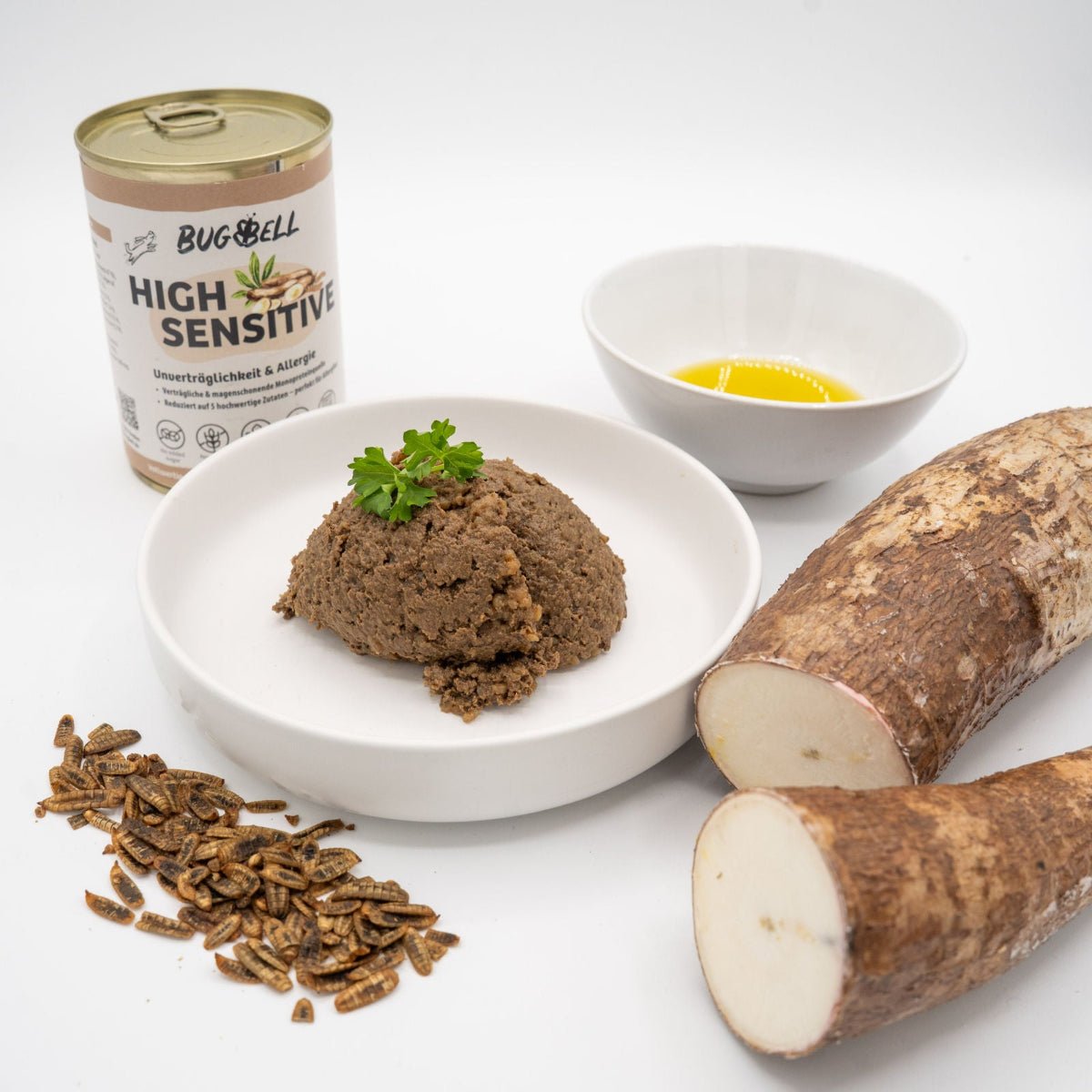
- BugBell – hypoallergenic insect protein as a nutritional base
- Treatment and therapy for allergies in dogs
- Prognosis and life expectancy with allergies
- Frequently Asked Questions about allergies in dogs (FAQ)
- Scientific sources and evidence
What are allergies in dogs?
An allergy is an overreaction of the immune system to otherwise harmless substances – called allergens. Instead of tolerating these substances, the body produces specific antibodies (especially IgE) which trigger an inflammatory reaction upon renewed contact. This reaction can affect the skin, intestines, ears, and respiratory tract.
Allergies in dogs rarely appear suddenly: Generally, there is a sensitization phase, during which the immune system "learns" about the allergen and gradually builds up hypersensitivity. Only after repeated contact – often over months or years – do clinically visible symptoms appear. This explains why many dogs suddenly react to their usual food, even though they have tolerated it for years without problems.
According to current estimates in veterinary dermatology, up to 10% of all dogs are affected by atopic dermatitis – food allergies and flea allergies occur in addition. Allergies are therefore among the most common chronic diseases in dogs.

Overview of types of allergies in dogs
Three main forms of allergy are distinguished in dogs:
| Type of allergy | Triggers | Typical symptoms | Diagnosis |
|---|---|---|---|
| Food allergy (CAFR) | Proteins in food (beef, chicken, wheat, milk) | Itching, skin rash, gastrointestinal problems, otitis | Elimination diet + provocation test |
| Atopic dermatitis (environmental allergy) | House dust mites, pollen, mold, animal dander | Seasonal or year-round itching, skin redness, ear infections | Favrot criteria + intradermal testing / IgE serology |
| Flea saliva allergy (FAD) | Flea saliva antigens | Severe itching on the back, tail, and thighs, hair loss | Clinical picture + flea detection + successful treatment |
Food allergy in dogs – most common triggers and mechanisms
In food allergies in dogs (Cutaneous Adverse Food Reaction, CAFR), the immune system reacts to specific dietary proteins. The most common triggers, according to scientific data, are:
- Beef: approx. 34% of confirmed food allergies in dogs – making it the most commonly identified allergen
- Dairy products: approx. 17%
- Chicken: approx. 15%
- Wheat: approx. 13%
- Lamb, soy, corn, egg: other relevant, but less frequently identified allergens
The reaction is based on an immunologically mediated mechanism: After repeated contact with a food protein, the immune system forms IgE antibodies or sensitized T-cells against this protein. Upon renewed contact, an inflammatory reaction is triggered, which manifests itself primarily in the skin and gastrointestinal tract.
Crucially: Most dogs with food allergies have eaten the offending protein for years without problems before symptoms appeared. This is because sensitization proceeds gradually and usually only reaches a clinically measurable level after a long period of exposure.
Atopic dermatitis in dogs (environmental allergy)
Canine atopic dermatitis (CAD) is a genetically determined, immune-mediated skin disease. It is characterized by a chronic, itchy inflammatory reaction to environmental allergens – especially house dust mites, pollen (grasses, trees, weeds), molds, and animal dander.
Characteristic features include:
- Breed predisposition: French Bulldogs, West Highland White Terriers, Shar-Peis, Labrador and Golden Retrievers, German Shepherds, and Boxers are particularly susceptible.
- Onset usually at a young age: Clinical signs typically appear between 1 and 3 years of age.
- Seasonal or year-round symptoms: Pollen allergies are seasonal, house dust mite allergies are usually year-round.
- Typical locations: Paws (paw licking), ears (otitis externa), armpits, belly, groin, face, and eye area.
- Skin barrier dysfunction: Dogs with CAD have a reduced skin barrier function, which promotes infections with bacteria (Staphylococcus) and yeasts (Malassezia).

Flea saliva allergy in dogs
Flea Allergy Dermatitis (FAD) is the most common skin disease in dogs worldwide. It results from a hypersensitivity reaction to certain salivary proteins of cat fleas (Ctenocephalides felis), which also frequently infest dogs.
Typical is intense itching, especially in the hindquarters: back, tail, thighs, and flanks. Even a single flea bite can cause hours of itching in sensitized dogs. Fleas themselves are often not visible because affected dogs remove them by scratching and biting – therefore, flea dirt detection on the back is the most important diagnostic tool.
The only causal therapy is consistent, year-round flea prophylaxis for all household pets and treatment of the environment, as flea larvae and pupae predominantly survive in carpets, upholstery, and crevices.
Recognizing allergy symptoms in dogs
Allergic reactions in dogs predominantly manifest on the skin, ears, and gastrointestinal tract. The symptoms are similar regardless of the type of allergy and therefore cannot be distinguished without targeted diagnostics:
- Persistent or recurrent itching (pruritus) – the most common and noticeable symptom
- Paw licking and chewing – often an early sign of an allergy
- Ear infections (otitis externa), often bilateral and recurrent
- Red, inflamed skin in armpits, groin, belly, and face
- Hair loss due to scratching, biting, and rubbing
- Secondary skin and ear infections with bacteria or Malassezia yeasts
- Gastrointestinal symptoms (in food allergy): Diarrhea, vomiting, bloating, altered stool
- Reddish discoloration of the coat on paws, face, and muzzle (so-called saliva staining)
- Eyelid margin inflammation and watery eyes
- In severe cases: Skin changes, thickening, and scaling (lichenification)
Diagnosis: How are allergies in dogs detected?
Allergy diagnosis in dogs is complex, as there is no single test that reliably identifies all forms of allergy. Diagnosis is carried out step-by-step as an exclusion process.
Step 1: Exclusion of other causes
First, diseases that cause similar symptoms are excluded: parasites (Sarcoptes, Demodex, Cheyletiella), bacterial infections, yeasts, thyroid diseases, and other systemic diseases.
Step 2: Flea Prophylaxis
A consistent flea treatment for at least 8 weeks is always the first step – even if no fleas are visible – to rule out flea saliva allergy.
Step 3: Elimination diet for diagnosing food allergy
The only reliable method for diagnosing a food allergy is a strict elimination diet for 8–12 weeks:
- Exclusively a new, previously unknown protein source plus a new carbohydrate source
- No treats, snacks, chew toys, or tablets with meat flavor
- After a successful diet: Provocation test with the old food to confirm diagnosis
- According to studies, 80% of food-allergic dogs achieve symptom remission after 5 weeks, and over 90% after 8 weeks
Step 4: Allergy testing for environmental allergies in dogs
Only after food allergy and other causes have been ruled out and a clinical diagnosis of atopic dermatitis has been made, are allergy tests useful:
- Intradermal testing (IDT): Injection of allergens into the skin – considered the gold standard for identifying relevant environmental allergens
- Allergen-specific IgE serology: Blood test for allergen-specific IgE antibodies – less invasive, but also less specific than IDT
- Blood, skin, and stool tests as allergy tests are not suitable for diagnosing a food allergy – scientific studies show no reliable accuracy here

Nutrition and food for allergies – what really matters
Nutrition is one of the most effective levers for allergic dogs – especially with food allergies, but also as a complementary measure for atopic dermatitis. The wrong food can persistently maintain or exacerbate symptoms, while a specifically formulated, hypoallergenic food can contribute to a significant improvement.
Basic principles of nutrition for allergic dogs
- Monoprotein food: Only a single, clearly declared protein source minimizes the risk of immunological reactions and enables a targeted elimination diet.
- Novel Protein Source: The protein source should be one with which the dog has not had previous contact in its dietary history – this minimizes the risk of sensitization.
- Strict elimination diet for 8–12 weeks: No extras, no treats, no additives. Any foreign protein source can invalidate the diet.
- Minimal ingredient list: The fewer components a food contains, the easier it is to identify and exclude potential allergens.
- Highly digestible ingredients: Easily digestible proteins and carbohydrates reduce the antigenic load in the intestine and relieve the intestinal barrier.
- Beware of cross-reactions: Dogs allergic to beef may also react to lamb, venison, or other ruminants (cross-reactivity). Beef, milk, and lamb share common allergen structures.
- Omega-3 fatty acids: EPA and DHA can modulate inflammatory skin reactions and strengthen the skin barrier – important as a complementary measure for atopic dermatitis.
Why insect protein can be particularly suitable for allergies
Insect protein – for example, from the Black Soldier Fly (Hermetia illucens) – is considered a novel protein source that most dogs have not encountered in their dietary history. Since allergies are based on prior sensitization, the risk of developing an allergy to insect protein introduced for the first time is statistically significantly lower than with conventional meat types such as beef, chicken, or lamb.
Additionally, insect protein is highly digestible, provides all essential amino acids with high biological value, and naturally contains lauric acid – a medium-chain fatty acid with inflammation-modulating properties. This makes it a scientifically sound option for hypoallergenic nutrition.
Key nutrients for allergic dogs at a glance
| Nutrient / Component | Significance in allergies | Note |
|---|---|---|
| Omega-3 fatty acids (EPA/DHA) | Inhibit the production of inflammatory eicosanoids (arachidonic acid cascade); can strengthen the skin barrier and reduce itching; recommended as a supplement to drug therapy for CAD | Fish oil or algae oil as a supplement; dose long-term |
| Highly digestible protein (monoprotein) | Reduces antigenic load in the intestine; minimizes the risk of immunological reactions to unknown protein components | Prefer novel protein; choose an accurately declared single source |
| Hypoallergenic carbohydrate source | Tapioca, potato, or white rice are well-tolerated and less allergenic than wheat, corn, or barley | Prefer grain-free if wheat sensitivity is known |
| Vitamin E and Zinc | Important for skin barrier function and immune system; often increased demand in allergic individuals due to chronic inflammatory processes | Ensure adequate supply in food |
| Vitamin A (Beta-Carotene) | Promotes regeneration of skin and mucous membrane barriers; important for epithelial cell differentiation | Obtained through natural ingredients (e.g., carrots, pumpkin) |
| Prebiotics (soluble fiber) | Promote a healthy gut microbiome, which co-regulates intestinal immune tolerance; a disturbed gut flora can exacerbate allergic reactions | Inulin, FOS, psyllium husks in small quantities |
| Probiotics | Can help modulate the balance in the intestinal immune system; studies on canine allergies are still limited but promising | Only after consultation with a veterinarian; strain and quality selection are crucial |
| Low-fat content | High-fat diets can promote inflammatory processes in the skin; low-fat, easily digestible foods relieve the entire organism | Aim for fat content below 12% in dry matter |
BugBell – Hypoallergenic Insect Protein as a Nutritional Basis
For dogs with diagnosed or suspected allergies, BugBell offers a consistently hypoallergenic food line based on insect protein. The products were developed in Germany with veterinarians and animal nutritionists and offer a meaningful option for exclusion diets and long-term allergy nutrition as a novel, monoprotein-based nutritional basis – always in consultation with the attending veterinarian.
What distinguishes BugBell products for allergic dogs:
-
Insect protein as a novel protein source – not yet encountered in most dogs' dietary history, therefore low sensitization risk
-
Monoprotein recipes – exclusively one animal protein source per product, allowing clear identification of triggers
-
Clearly declared – all ingredients and percentage quantities are fully and transparently stated
-
Free from gluten, sugar, soy, and artificial flavors and colors
-
Various functional lines for different accompanying problems: HighSensitive for sensitive gastrointestinal tracts, BellyVital for gut health, SkinHero for skin and coat support – always based on insect protein
-
Developed with veterinarians and animal nutritionists and manufactured in Germany
View BugBell Products For sensitive dogs

Treatment and Therapy for Allergies in Dogs
Treatment depends on the type of allergy, its severity, and the individual dog. A multimodal approach is usually most successful:
-
Allergen avoidance: The most effective therapy is to avoid the triggering allergen – through a permanently adjusted diet for food allergies, and consistent flea prophylaxis for flea bite allergies.
-
Corticosteroids (Prednisolone): Effective for short-term control of itching and inflammation; significant side effects possible with long-term use (immunosuppression, Cushing's syndrome).
-
Oclacitinib (Apoquel®): JAK inhibitor that specifically inhibits the itch signaling pathway; acts quickly and is more suitable for long-term therapy than steroids.
-
Cyclosporine (Atopica®): Immunomodulator for long-term therapy of atopic dermatitis; slow onset of action (4–8 weeks).
-
Lokivetmab (Cytopoint®): Monoclonal antibody against IL-31 (central itch mediator); monthly injection, well tolerated.
-
Allergen-specific immunotherapy (ASIT): The only causal therapy for atopic dermatitis; by gradually habituating the immune system to specific allergens. Response rate approx. 50–80%; permanent therapeutic success possible.
-
Topical therapy: Special shampoos, skin care sprays, and ear drops support the skin barrier and combat secondary infections.
-
Treatment of secondary infections: Bacterial infections (pyoderma) and yeast infections (Malassezia dermatitis) must be specifically treated – they can significantly exacerbate itching.
-
Permanently adjusted diet: Indispensable long-term for food allergies; additionally helpful for atopic dermatitis (Omega-3, skin barrier nutrients).
Prognosis and Life Expectancy for Allergies in Dogs
Allergies in dogs are generally not curable but can be well controlled with the right measures. The prognosis depends on the type of allergy and the consistency of the therapy:
- Food allergy: Very good prognosis if the triggering allergen is identified and consistently avoided. Many dogs are permanently symptom-free with a continuously adjusted diet.
- Flea bite allergy: Excellent prognosis with consistent, year-round flea prophylaxis for all pets in the household.
- Atopic dermatitis: Chronic disease requiring lifelong therapy. Good symptom management is possible with ASIT and/or modern pharmacotherapy (Oclacitinib, Lokivetmab, Cyclosporine). Many affected dogs reach a nearly normal life expectancy with good treatment.
Early diagnosis, consistent allergen avoidance, and close veterinary care are crucial for a good quality of life.
Frequently Asked Questions about Allergies in Dogs (FAQ)
How do I know if my dog has a food allergy?
The most common signs are persistent itching (especially on paws, ears, and belly), recurrent ear infections, and simultaneous gastrointestinal problems. Since food allergy and environmental allergy are often clinically indistinguishable, an elimination diet under veterinary supervision for 8–12 weeks is the only reliable diagnostic method.
What food is best for allergies?
A hypoallergenic, monoprotein-based food with a novel protein source that the dog has not eaten before is suitable. Insect protein is considered a particularly suitable option as it does not appear in the dietary history of most dogs. Important: The recipe should be minimal and clearly declared.
Can blood tests reliably detect allergies in dogs?
No. Serological IgE tests (blood tests) and hair tests do not have sufficient scientifically proven accuracy for the diagnosis of food allergies. They can be used as a supplement to identify potential environmental allergens for immunotherapy – but do not replace an elimination diet.
Can a dog get used to new allergens over time?
The opposite is more likely: dogs can develop sensitization to new proteins with long-term exposure. Therefore, experts recommend sticking to the proven novel protein food long-term and not changing unnecessarily.
Is an allergy curable?
Food allergies and atopic dermatitis are currently not curable. However, through consistent allergen avoidance (food allergy) or allergen-specific immunotherapy (atopic dermatitis), permanent symptom-free periods or significant improvement can be achieved in many cases.
Can allergies in dogs shorten their life expectancy?
Uncontrolled, chronic allergies can lead to permanent skin damage, secondary infections, and a significant reduction in quality of life. However, with consistent therapy, no reduction in life expectancy is generally expected.
Scientific Sources and References
- Favrot C, Steffan J, Seewald W, Picco F. A prospective study on the clinical features of chronic canine atopic dermatitis and its diagnosis. Vet Dermatol. 2010;21(1):23–31. – Prospective study on a large CAD cohort: development and validation of the clinical Favrot diagnostic criteria with approx. 80% sensitivity and specificity; proof that food-induced and non-food-induced atopic dermatitis are clinically indistinguishable – an elimination diet is therefore always indicated.
- Olivry T, DeBoer DJ, Favrot C, Jackson HA, Mueller RS, Nuttall T, Prélaud P; International Committee on Allergic Diseases of Animals (ICADA). Treatment of canine atopic dermatitis: 2015 updated guidelines from the International Committee on Allergic Diseases of Animals (ICADA). BMC Vet Res. 2015;11:210. – International consensus report: multifactorial treatment approach for CAD; corticosteroids and oclacitinib for acute flares; cyclosporine and ASIT for long-term therapy; increased intake of essential fatty acids recommended as supportive measure.
- Hensel P, Santoro D, Favrot C, Hill P, Griffin C. Canine atopic dermatitis: detailed guidelines for diagnosis and allergen identification. BMC Vet Res. 2015;11:196. – ICADA guidelines for diagnosis and allergen identification: intradermal testing and IgE serology serve exclusively for allergen identification for ASIT; allergy tests do not replace an elimination diet; Favrot criteria confirmed as a clinical diagnostic tool.
- Mueller RS, Olivry T, Prélaud P. Critically appraised topic on adverse food reactions of companion animals (2): common food allergen sources in dogs and cats. BMC Vet Res. 2016;12:9. – Systematic evaluation of provocation studies in 297 dogs: The most common food allergens in dogs are beef (34%), dairy products (17%), chicken (15%), and wheat (13%); these proteins should initially be completely avoided as part of an elimination diet.
- Olivry T, Mueller RS, Prélaud P. Critically appraised topic on adverse food reactions of companion animals (1): duration of elimination diets. BMC Vet Res. 2015;11:225. – Evidence-based analysis of the optimal duration of elimination diets: After 5 weeks, 80% of food-allergic dogs achieve remission, after 8 weeks over 90%; up to 13 weeks are required for less than 5% of dogs – basis for the recommendation of an 8–12-week diet duration.
- Mueller RS, Unterer S. Adverse food reactions: Pathogenesis, clinical signs, diagnosis and alternatives to elimination diets. Vet J. 2018;236:89–95. – Review of the pathogenesis and diagnosis of food intolerances: Serological tests, blood tests, and hair tests are not scientifically reliable for the diagnosis of food allergy; the elimination diet with novel protein plus carbohydrate source is the diagnostic gold standard; long-term management through allergen avoidance.
- Hillier A, Griffin CE; ACVD Task Force on Canine Atopic Dermatitis. The ACVD task force on canine atopic dermatitis (I): incidence and prevalence. Vet Immunol Immunopathol. 2001;81(3–4):147–151. – Fundamental survey by the ACVD Task Force: The prevalence of atopic dermatitis in dogs is estimated to be up to 10% of the dog population; it accounts for a significant proportion of reasons for presentation in general small animal practices; atopic dermatitis is one of the most common chronic diseases in dogs.
- Pilla R, Suchodolski JS. The gut microbiome of dogs and cats, and the influence of diet. Vet Clin North Am Small Anim Pract. 2021;51(3):605–621. – Review: Altered gut flora (dysbiosis) can impair intestinal immune tolerance and exacerbate allergic reactions; prebiotic fibers and probiotics can stabilize the microbiome and positively influence mucosal immune regulation – argument for a gut-oriented nutritional strategy even in allergic dogs.
- Olivry T, Mueller RS, Prélaud P. Critically appraised topic on adverse food reactions of companion animals (9): time to flare of cutaneous signs after a dietary challenge in dogs and cats with food allergies. BMC Vet Res. 2020;16:158. – Analysis of provocation data: After reintroduction of the allergen, symptoms usually appear within 1–14 days in dogs; these data are crucial for the correct conduct and interpretation of the provocation test after an elimination diet.
Dog Food at Allergies in Dogs
Please note: Our products can contribute to nutritional support, but they are not cures. Please always seek professional veterinary advice if your dog has health problems.